
Exosome H: The Innovative Dual-Action Treatment for Hair & Skin
In the rapidly evolving landscape of medical aesthetics and regenerative medicine, a new pinnacle has been reached. Exosome H by AuroTechnology stands as a paradigm-shifting professional treatment, ingeniously engineered to address two of the most pervasive concerns: androgenetic alopecia (pattern hair loss) and cutaneous aging. This is not merely another serum or topical solution; it is a sophisticated, dual-stage biologic protocol that harnesses the profound communicative power of exosomes, synergized with targeted bioactive peptides and advanced hydrators.
The relentless pursuit of effective, minimally invasive regenerative solutions has led clinicians and patients alike to a frustrating crossroads—treatments often offer isolated, temporary results without addressing the foundational cellular dysfunction. Exosome H emerges as the science-backed answer, offering a holistic, dual-action approach for the scalp and skin. This 3000+ word guide deconstructs the innovation into seven pivotal points, providing the data, science, and clinical context you need to understand why this product is redefining treatment protocols in clinics worldwide. Discover the full technical specifications and professional purchase options for Exosome H on the official AuroThread website.
1. The Core Innovation: Decoding the "Dual-Stage" System of Exosome H
At its heart, Exosome H is a masterclass in formulation engineering. Unlike single-vial solutions, it employs a two-component system that is mixed before application, ensuring maximum potency and stability of its active ingredients.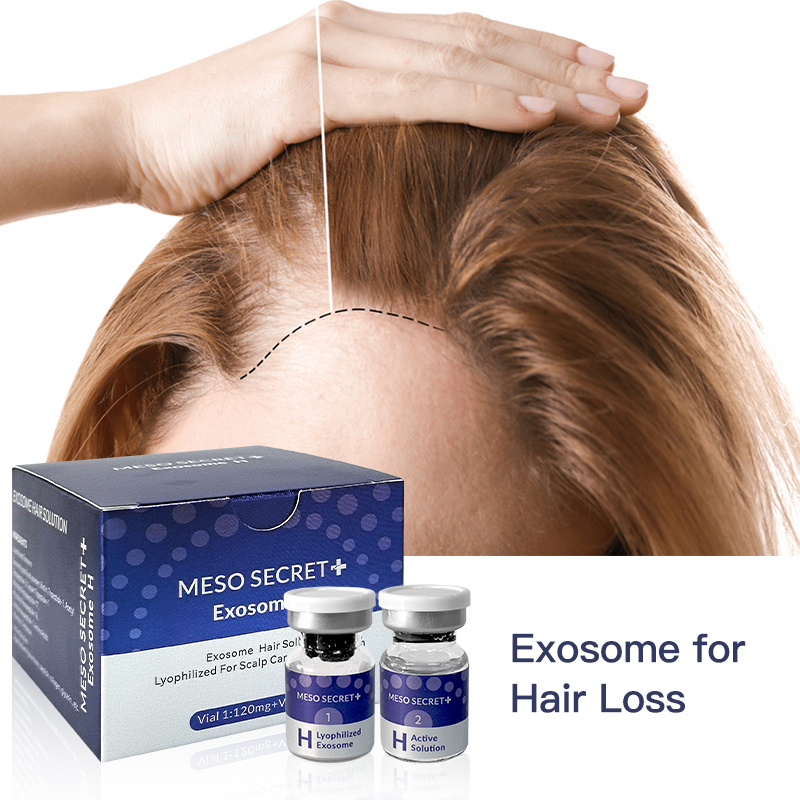
-
Stage 1: The Lyophilized Exosome Powder.
This vial contains the cornerstone of regenerative power: lyophilized (freeze-dried) exosomes derived from Human Dermal Fibroblast culture. Lyophilization is a critical process that preserves the delicate vesicle structure and bioactivity of exosomes without the need for refrigeration, extending shelf life and ensuring the cargo of growth factors, cytokines, and mRNA is intact upon reconstitution. These exosomes are not just extracts; they are the purified messengers from multipotent cells, specifically chosen for their role in skin and hair follicle biology. The human dermal fibroblast origin is key, as these cells are central to producing the extracellular matrix (ECM)—the scaffold of our skin and the crucial environment for hair follicle health. Research published in the Journal of Extracellular Vesicles consistently highlights how fibroblast-derived exosomes can modulate collagen production, reduce inflammation, and stimulate neighboring cells, making them ideal for regenerative purposes.
-
Stage 2: The Active Peptide & Hydration Solution.
This companion liquid is far from a simple diluent. It is a potent cocktail infused with bioactive peptides and Aqua Sodium Hyaluronate. Peptides are short chains of amino acids that act as signaling molecules, instructing cells to perform specific functions like building collagen or anchoring hair follicles. Sodium Hyaluronate, the sodium salt of Hyaluronic Acid, is a supreme humectant that binds over 1000 times its weight in water, providing immediate tissue hydration and creating a plump, volumized matrix for the exosomes to work within. This combination ensures that upon reconstitution, the exosomes are delivered in a nutrient-rich, hydrating medium that primes the tissue for regeneration and supports the exosomes' communicative functions.
The genius of Exosome H lies in this separation and combination. By keeping the potent exosomes in a stable, dry state until the moment of use, and pairing them with a solution designed to enhance their delivery and initial tissue response, the product guarantees clinicians are applying a treatment at the peak of its biologic activity. This dual-stage system represents a significant advancement over pre-mixed, potentially degraded biologic serums. Learn more about the science of stable exosome formulations from this National Institutes of Health (NIH) resource on exosome isolation and characterization.
2. The Science of Action: How Human Dermal Fibroblast Exosomes Reactivate Hair Follicles
Hair loss, particularly androgenetic alopecia, is fundamentally a process of follicular miniaturization and disrupted growth cycles. Dihydrotestosterone (DHT) sensitivity, micro-inflammation, and a depleted follicular stem cell microenvironment lead to progressively thinner, shorter hairs until the follicle becomes dormant. Exosome H intervenes at a cellular level to reverse this process.
The human dermal fibroblast-derived exosomes in Exosome H act as a multi-targeted signaling network:
-
Modulating the Hair Growth Cycle:
They deliver signals that help shift dormant (telogen) hair follicles back into the active growth (anagen) phase. A study in the International Journal of Molecular Sciences has shown that exosomes can upregulate β-catenin and other pathways crucial for anagen induction.
-
Revitalizing the Dermal Papilla (DP):
The dermal papilla is the command center of the hair follicle, instructing matrix cells to proliferate and form the hair shaft. In androgenetic alopecia, DP cells shrink and lose their signaling capability. Exosomes deliver growth factors (like VEGF, FGF) and miRNAs that rejuvenate DP cell function, encouraging them to regain their normal size and signaling activity. This is supported by research on mesenchymal stem cell-derived exosomes for hair growth, as reviewed in Stem Cell Research & Therapy.
-
Reducing Perifollicular Inflammation:
Chronic, low-grade inflammation is a key driver of hair follicle damage and stem cell depletion. Exosomes possess potent immunomodulatory properties, helping to calm the inflammatory microenvironment around the follicle, which is often exacerbated by DHT. This creates a healthier "soil" for hair growth. The American Academy of Dermatology Association outlines the role of inflammation in various hair loss types, which can be explored here.
-
Stimulating Angiogenesis:
New blood vessel formation (angiogenesis) is vital for delivering oxygen and nutrients to the growing follicle. Exosome cargo includes pro-angiogenic factors that promote a richer blood supply to the scalp, directly supporting thicker, healthier hair growth.
When paired with the peptides in the active solution—some of which may target hair follicle anchoring or growth factor mimicry—the exosome activity is complemented and enhanced, creating a powerful, synergistic stimulus for hair regeneration from within. This positions Exosome H as a frontline, biology-based intervention for hair restoration.
3. Beyond Hair: The Potent "Skinbooster" Effect for Microneedling and Rejuvenation
While "H" may stand for hair, the applications of Exosome H extend masterfully into comprehensive facial and skin rejuvenation, earning its title as a premier skinbooster for microneedling. Microneedling (Collagen Induction Therapy) works by creating controlled micro-injuries, triggering the body's wound healing cascade to produce new collagen and elastin. Exosome H doesn't just rely on this passive trigger; it actively guides and supercharges the regenerative response.
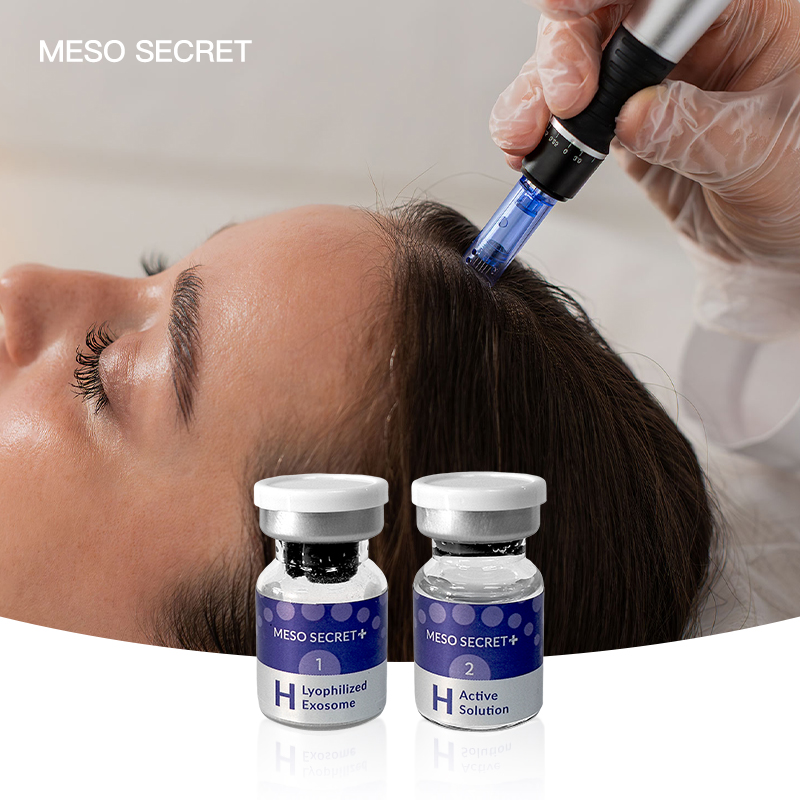
When applied during or immediately after microneedling, the reconstituted Exosome H solution penetrates the created micro-channels, delivering its payload directly to the dermis. Here’s how it transforms the outcomes:
-
Enhanced Collagen & Elastin Synthesis:
The exosomes deliver direct instructions to dermal fibroblasts—the very cells that produce collagen and elastin—to ramp up production. They don't just stimulate a general repair response; they promote the synthesis of organized, high-quality Type I and III collagen, leading to improved skin density, firmness, and reduction of fine lines. The role of exosomes in wound healing and tissue repair is a major focus of regenerative medicine research.
-
Improved Skin Texture and Tone:
By optimizing the wound healing process and reducing inflammatory scarring, Exosome H promotes smoother, more even-toned skin. It can help mitigate post-inflammatory hyperpigmentation (PIH) and improve the appearance of acne scars, stretch marks, and enlarged pores.
-
Deep Hydration and Barrier Restoration:
The Aqua Sodium Hyaluronate provides an intense, deep-dermal reservoir of hydration, while the exosomes aid in strengthening the skin's natural barrier function. This results in a pronounced glow, improved suppleness, and greater resilience against environmental stressors.
-
Anti-Inflammatory and Brightening Effects:
The exosomes' immunomodulatory signals help calm post-procedure redness and irritation more quickly. Furthermore, some studies suggest exosomes can inhibit melanin production pathways, contributing to a brighter, more radiant complexion.
This dual utility makes Exosome H an exceptionally efficient and versatile tool for aesthetic practitioners. A single treatment can address scalp hair loss and facial rejuvenation, or be used as a standalone powerhouse for either indication. For a deeper understanding of microneedling mechanisms and synergies with bioactive agents, refer to this clinical review in Dermatologic Surgery: Microneedling: A Comprehensive Review.
4. The Clinical Edge: Data-Backed Results and Treatment Protocols
The promise of Exosome H is anchored in observable, measurable results. While individual outcomes vary, the underlying biologic mechanisms translate into consistent clinical improvements.
For Hair Regrowth:
-
Increased Hair Density and Diameter:
Patients typically undergo a series of treatments (often 3 sessions spaced 4-6 weeks apart). Clinical assessments show a measurable increase in hair count per square centimeter and, crucially, an increase in hair shaft thickness. This addresses both the quantity and quality of regrowth.
-
Reduced Shedding:
One of the earliest signs of improvement is often a noticeable reduction in daily hair shedding, as the treatment helps stabilize the growth cycle and strengthen the follicle's hold.
-
Improved Scalp Health:
Practitioners report decreased scalp oiliness, redness, and itching, indicating a reduction in the inflammatory milieu.
For Skin Rejuvenation:
Objective Measures: Studies utilizing devices like the Visia® Complexion Analysis system document improvements in wrinkle metrics, skin evenness, and pore appearance.
Subjective Satisfaction: High patient satisfaction scores are reported for improvements in skin smoothness, tightness, hydration, and overall radiance.
Professional Treatment Protocol:
(1) Consultation & Assessment: A qualified practitioner evaluates the scalp/skin, discusses goals, and formulates a plan.
(2) Preparation: The scalp or skin is cleansed, and a topical anesthetic may be applied for comfort.
(3) Application: The practitioner reconstitutes the lyophilized exosome powder with the active solution. For hair: it is typically injected via mesotherapy technique into the mid-dermis of the scalp. For skin: it is applied topically and infused using a microneedling device (e.g., Dermapen), or injected via mesotherapy for deeper wrinkles.
(4) Post-Treatment: Mild redness or swelling may occur for 24-48 hours. Sun protection and gentle care are recommended.
(5) Treatment Series: A minimum of 3 treatments is standard for optimal, lasting results, with maintenance sessions recommended every 6-12 months.
To explore the broader clinical evidence for exosome therapies in dermatology, this comprehensive review from Clinics in Dermatology provides excellent context: Exosomes in Dermatology: Biology and Therapeutic Potential.
5. Safety, Purity, and Why "Medical-Grade" Matters
In the burgeoning field of exosome therapies, the terms "medical-grade" and "professional use only" are not just marketing—they are essential safeguards. Exosome H is designed and manufactured to meet stringent standards that differentiate it from over-the-counter or poorly characterized products.
-
Rigorous Sourcing and Testing:
The exosomes are derived from ethically sourced, rigorously screened human dermal fibroblast cell lines cultured under ISO-certified laboratory conditions. The entire process, from cell culture to exosome isolation and lyophilization, follows cGMP (Current Good Manufacturing Practice) guidelines. This ensures the product is free from pathogens, endotoxins, and contaminants.
-
Characterization and Potency:
Each batch is characterized for its exosome concentration (particle count via NTA), size distribution, and the presence of specific exosomal markers (like CD63, CD81). This guarantees clinicians are applying a product with known, consistent biologic activity, not an undefined cellular soup.
-
Minimal Immunogenic Risk:
As an acellular product (containing the messengers, not the cells themselves), Exosome H presents an extremely low risk of immune reaction or rejection. The human-derived nature further enhances biocompatibility.
-
Professional Administration:
The requirement for administration by a trained medical professional (doctor, nurse, licensed aesthetician under supervision) ensures proper diagnosis, technique, and management of any potential side effects, which are typically minimal (temporary redness, swelling, or pinpoint bleeding).
This medical-grade framework is critical for both safety and efficacy. Patients and practitioners must be vigilant against unverified "exosome" products in the market that lack this level of quality control. The U.S. Food and Drug Administration (FDA) provides guidance on the regulatory considerations for exosome products, which underscores the importance of manufacturing standards: FDA Perspectives on Exosome Products.
6. Comparative Advantage: What Sets Exosome H Apart from PRP, Minoxidil, and Other Treatments
To fully appreciate the innovation of Exosome H, it's valuable to compare it to existing standard therapies:
-
vs. Platelet-Rich Plasma (PRP):
PRP relies on growth factors from the patient's own platelets. However, its potency is highly variable depending on the patient's age, health, and platelet count. Exosome H offers a standardized, high-potency dose of regenerative signals (exosomes) that is not dependent on the patient's own biologic variability. It also contains the added benefits of the peptide and hyaluronate solution, which PRP lacks.
-
vs. Topical Minoxidil and Oral Finasteride:
These are lifelong pharmaceutical commitments with variable efficacy and potential side effects (scalp irritation, sexual side effects). Exosome H is a biologic, procedural treatment that aims to correct the underlying cellular dysfunction, potentially offering lasting results after a treatment series without daily medication. It can also be used synergistically with these treatments for enhanced results.
-
vs. Other Exosome Products:
Many exosome formulations are liquid suspensions requiring cold chain logistics, risking degradation. The lyophilized powder form of Exosome H ensures superior stability and shelf life. Its specific derivation from human dermal fibroblasts makes it uniquely targeted for skin and hair applications, unlike exosomes from other cell sources (e.g., stem cells from umbilical cord or adipose tissue, which may have different cargo profiles).
-
vs. Standalone Microneedling or Skinboosters:
While microneedling alone stimulates collagen, adding Exosome H acts as a directed "instruction manual" for that healing, leading to more significant and predictable results. Compared to hyaluronic acid skinboosters alone, Exosome H provides both immediate hydration and long-term regenerative signaling.
This positions Exosome H not necessarily as a replacement for all other therapies, but as a powerful, next-generation option that can be used as a primary treatment or in a complementary protocol for superior, multi-faceted regeneration.
7. The Future of Regenerative Aesthetics and Final Verdict on Exosome H
Exosome H is more than a product; it is a harbinger of the future in aesthetic and trichological medicine. It represents the shift from symptomatic management to cellular communication and restoration. As research continues to unlock the specific cargo and targets of different exosome types, formulations will become even more precise. However, Exosome H today offers a clinically relevant, scientifically grounded application of this cutting-edge science.
Final Verdict:
For the patient struggling with early to moderate hair loss or seeking genuine skin rejuvenation without surgery or extensive downtime, Exosome H presents a compelling, effective, and minimally invasive option. It is an investment in addressing the root cause of the issue.
For the practitioner, it is a powerful, versatile, and premium tool that elevates treatment offerings, improves patient outcomes, and aligns a practice with the forefront of regenerative science.
The journey to hair restoration and skin revitalization requires a partner grounded in robust science. By choosing a protocol centered on a product like Exosome H, you are selecting a path defined by biologic intelligence, medical-grade assurance, and holistic regeneration. To begin this journey or to integrate this technology into your practice, explore the source directly: Purchase and learn more about Exosome H at AuroThread.com.