
A Step-by-Step Guide to Using AURO PRP Tubes (ACD+Gel)
This guide provides a technical, step-by-step methodology for achieving 3-5x baseline platelet concentration with maximum purity using AURO PRP Tubes. These medical-grade tubes, featuring an advanced ACD (Acid Citrate Dextrose) anticoagulant and a sophisticated gel barrier system, are engineered to eliminate variability. Available in 8ml, 10ml, 12ml, and 15ml sizes, they cater to a wide range of therapeutic applications, from orthopedic injections to facial rejuvenation. We will explore the science behind each step, ensuring your clinical practice is backed by engineering precision.
Step 1: Understanding the Dual-Separation Technology (The "Why" Before the "How")
Before drawing blood, it is crucial to understand why the AURO PRP Tube is structured differently from a standard vacutainer. The tube’s design directly addresses two of the biggest challenges in PRP therapy: platelet activation during centrifugation and cross-cellular contamination.
The internal environment of your chosen tube dictates the quality of the final injectate. A study from the University of Las Palmas de Gran Canaria specifically compared anticoagulants and found that while both SC and ACD-A yielded similar platelet concentrations, the choice of anticoagulant impacts the leukocyte count in the final product . The AURO PRP system utilizes ACD-A, which is preferred for its ability to maintain platelet structural stability by chelating calcium, effectively putting the platelets into a "hibernation mode" during the separation process. This prevents premature degranulation, ensuring that the growth factors are released precisely when you inject them into the target tissue, not wasted inside the tube .
Furthermore, the "Gel" component is not merely a physical barrier. Patented polymer resin technologies used in modern separation gels are designed for specific gravity and hydrophobic interaction . The gel in the AURO PRP line activates during centrifugation, migrating to form a stable, impenetrable barrier precisely between the buffy coat (platelets) and the red blood cells. This medical-grade barrier ensures that when you extract the PRP, you are not drawing hemolyzed red blood cells or cellular debris, which are proven to cause pain at the injection site and can inhibit the regenerative healing process.
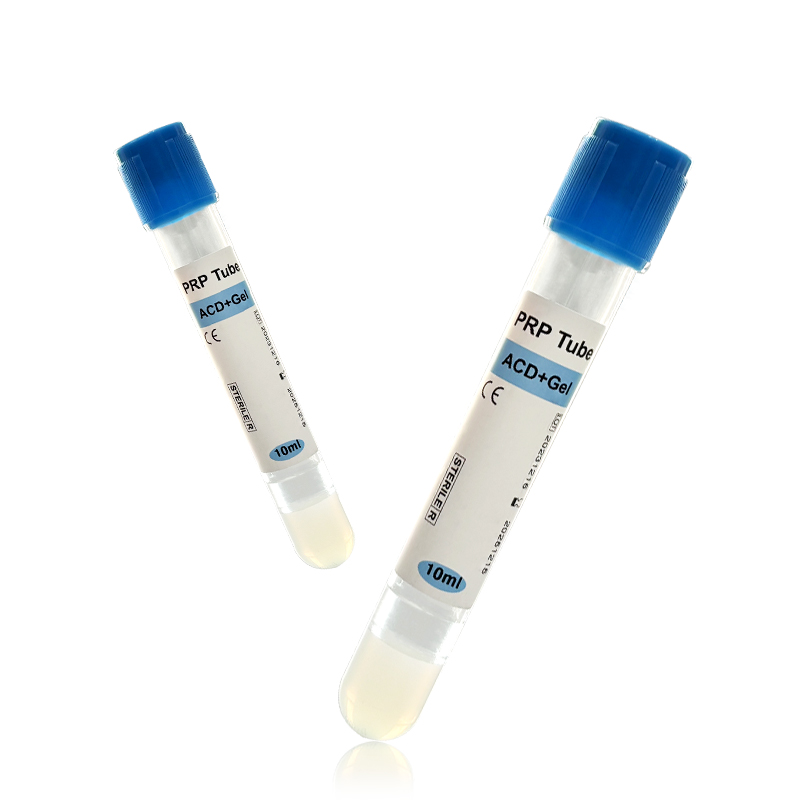
Step 2: Selecting the Correct Tube Size for Your Clinical Protocol
One of the most practical advantages of the AURO PRP line is the availability of multiple size options. The choice between 8ml, 10ml, 12ml, and 15ml tubes should be dictated by the treatment area and the required volume of PRP. Research indicates a direct correlation between the volume of peripheral blood drawn and the absolute number of platelets obtained . Therefore, selecting the right tube is the first quantitative step in dose optimization.
For treatments requiring small, precise volumes—such as mesotherapy for the face or scalp injections—the 8ml or 10ml AURO PRP Tubes are ideal. These typically yield 1-3ml of active PRP, sufficient for microneedling or small-area injections. The precision offered by these smaller tubes ensures that every drop of this valuable biologic is utilized effectively, minimizing waste and maximizing patient benefit.
When addressing large joints like the knee, which often require 4-6ml of PRP to effectively cover the joint surface, the 12ml or 15ml AURO PRP Tubes are recommended. The larger input volume ensures that after centrifugation and concentration, you have an adequate therapeutic dose to deliver. This is particularly critical in orthopedics, where the biological environment of a degenerative joint demands a higher absolute platelet count to initiate a meaningful regenerative response.
For advanced applications such as preparing PRP for a wound bed or creating a PRP gel matrix for surgical applications, higher volumes are necessary. The 15ml tube provides the necessary starting material to create these thicker, scaffold-like applications as classified by the FDA for wound management. By standardizing your protocol with the appropriate AURO PRP Tube, you eliminate the guesswork of "pooling" multiple small tubes, thereby reducing the risk of contamination and procedural inconsistency.
Step 3: The Blood Draw - Minimizing Activation and Ensuring Sterility
The moment the needle enters the vein, the clotting cascade begins. To counteract this, the vacuum in the AURO PRP Tube is precisely calibrated to mix the blood immediately with the ACD-A solution.
Technique:
Use a large-bore needle (21G or larger) to minimize shear stress on the platelets. High shear forces can mechanically activate platelets, leading to degranulation before centrifugation.
Gentle Inversion: Immediately after the draw, gently invert the tube 5-6 times. This is not merely a suggestion; it is a critical step to ensure the 1.5ml of ACD-A solution (in a standard 8.5ml tube, for example) mixes completely with the whole blood. Failure to do so can result in micro-clots, which will be spun down into the buffy coat and contaminate your final product.
Processing Window: For optimal results, blood collected in ACD tubes should be processed within 1-2 hours. While the ACD solution preserves platelet morphology, time is still a factor in maintaining peak viability.
Step 4: Mastering the Centrifugation - The "Force and Time" Equation
Centrifugation is where the Dual Separation Technology of the AURO PRP tube truly excels. The goal is to create a density gradient where the Red Blood Cells (heaviest) pass through the gel, the Platelets (lightest) remain in the plasma, and the gel barrier locks into place between them.
There is no universal "one-size-fits-all" g-force, as different clinical goals require different PRP compositions (e.g., Leukocyte-Rich PRP vs. Pure PRP). However, the engineering of the AURO tube provides a wide window of operational success.
If the gel barrier appears wavy or if the red blood cells have not compacted fully, it may indicate that the centrifuge temperature is too low (gels are temperature-sensitive) or the spin time was insufficient. Always validate your centrifuge regularly to ensure it achieves the programmed g-force without excessive vibration, as vibration can disrupt the delicate layering process .
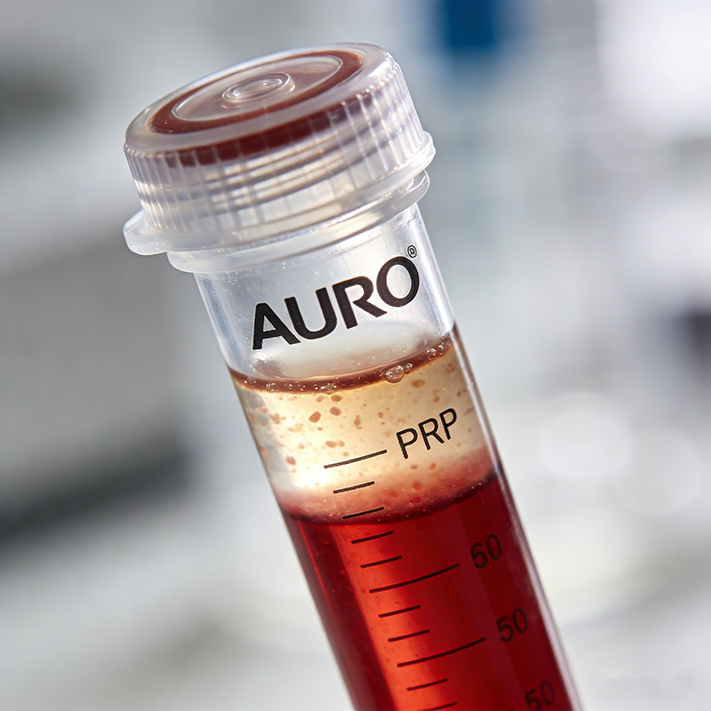
Step 5: Extraction - Harvesting the Pure Concentrate
With the physical barrier provided by the gel, extraction becomes a straightforward, error-proof process. Unlike tubes without gel, where the technician must visually estimate how close to get to the buffy coat (risking red blood cell aspiration), the AURO PRP tube’s barrier makes it impossible to accidentally pull red cells.
Procedure:
-
Stabilize the Tube:
Remove the tube carefully from the centrifuge to avoid disturbing the gel layer. Place it in a sterile rack.
-
Prepare the Syringe:
Attach a sterile 18G spinal needle or a long aspiration needle to a 5ml or 10ml syringe.
-
Insertion:
Insert the needle at the top of the plasma layer. Advance the tip until it is just above the gel barrier. You will feel slight resistance if you touch the gel, but the needle will not pass through it.
-
Aspiration:
Slowly draw the PRP into the syringe. Because the gel forms a perfect seal, you can extract the entirety of the plasma layer down to the last drop without fear of contamination.
-
Counting:
At this stage, you can send a small aliquot for platelet counting. Studies on ACD tubes have shown that single-spin methods can yield a 2.06 to 2.44-fold increase in platelet concentration, with significant reductions in pro-inflammatory leukocytes . The AURO system, with its optimized gel, is engineered to consistently hit the 3-5x concentration ratio, meeting the expert consensus for therapeutic efficacy which recommends concentrations of 4-8 times the baseline .
Step 6: Activation and Application - Delivering the Growth Factors
The PRP in your syringe is still in a liquid state; the platelets are intact and have not yet released their growth factors. Activation is the trigger that converts the liquid PRP into a bioactive gel or an activated injectate.
-
Chemical Activation:
Mixing the PRP with Calcium Chloride or Thrombin will cleave the fibrinogen into fibrin, creating a gel-like clot. This is ideal for wound beds or ulcer treatments as it creates a scaffold that stays in place, releasing growth factors over several days. The FDA classifies these kits specifically for such exuding cutaneous wounds .
-
Mechanical Activation:
For intra-articular injections (like knee osteoarthritis), many clinicians prefer to rely on the high concentration of Type I collagen in the target tissue to activate the platelets naturally upon injection. This results in a sustained, "burst-free" release of anabolic growth factors like TGF-β1 and PDGF, which help counteract the catabolic, inflammatory environment of an arthritic joint .
Step 7: Quality Control and Regulatory Considerations
As a medical professional, you are not just a clinician but also a quality control officer. The variability in PRP results has long been the subject of regulatory scrutiny. The U.S. Food and Drug Administration classifies these peripheral blood processing devices as Class II medical devices, requiring 510(k) clearance, which underscores the importance of using validated, sterile, and reliable equipment .
By choosing AURO PRP Tubes , you are opting for a device that meets international medical device standards. The sterile packaging guarantees that the interior of the tube and the gel are free from endotoxins, which is non-negotiable when the final product is being re-injected into a patient.
Conclusion: The Standardization of Success
Achieving consistent, high-quality PRP is not about luck; it is about engineering. The days of using random blood collection tubes and hoping for the best are over. With the advent of standardized systems like the AURO PRP Tubes with ACD+Gel Solution, clinicians can now follow a predictable, scientific protocol that ensures every patient receives a potent, pure, and viable therapeutic dose.
From the moment the blood enters the ACD anticoagulant to the final barrier separation provided by the medical-grade gel, every component works in concert to protect the delicate platelets. Whether you are treating a complex diabetic ulcer, an osteoarthritic knee, or performing advanced facial rejuvenation, the principles remain the same: high concentration, high purity, and high viability.
To standardize your regenerative protocols and explore the full range of size options for your specific needs, visit the comprehensive collection of AURO PRP Tubes and take the first step towards predictable, exceptional patient outcomes.
Disclaimer: This guide is for informational purposes and reflects standard clinical practices. Always follow your local regulatory guidelines and manufacturer’s instructions for use. Results may vary based on individual patient physiology and specific clinical techniques.