
4D Hyaluronic Acid Skinbooster Guide
4D Hyaluronic Acid represents a revolutionary advancement in skin hydration technology. Unlike traditional hyaluronic acid formulations that use a single molecular weight, 4D HA combines four distinct types of sodium hyaluronate, each with unique properties and target layers within the skin . This innovative approach creates a three-dimensional network that accurately targets different skin layers, providing comprehensive hydration from the surface to the deep dermis.
For practitioners seeking high-quality 4D HA products for clinical use, Aurothread’s 4D Hyaluronic Acid Skinbooster collection offers professional-grade formulations designed for injectable and topical applications. The four components work synergistically to achieve what single-molecule HA cannot: true multi-layer hydration.
The Four Components: Targeting Every Skin Layer
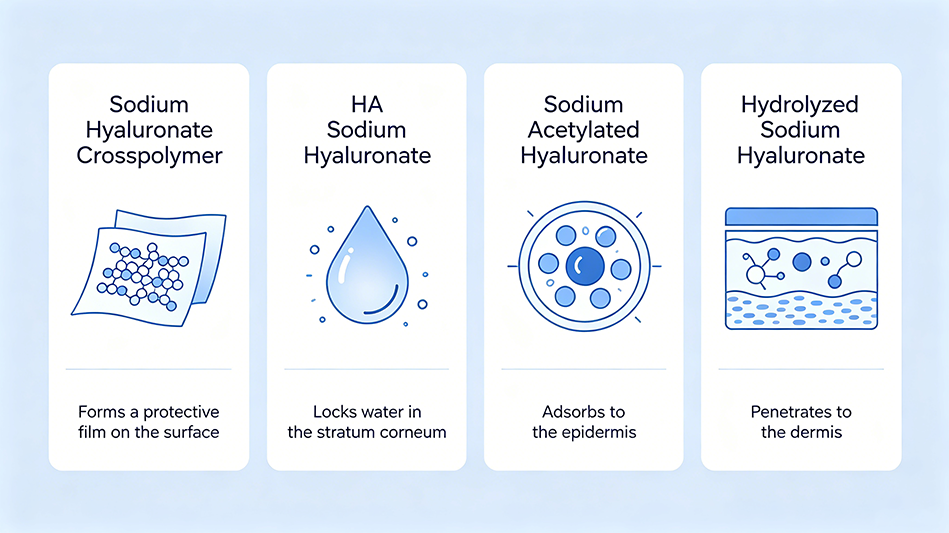
Each of the four HA components in a 4D formulation serves a distinct purpose. According to the technical data from Bloomage Bioactive, the composition includes:
Sodium Hyaluronate Crosspolymer: Forms a 24-hour ultra-long-time moisturizing biological protection film on the skin surface, reducing water loss and resisting environmental stressors like PM2.5/UV .
Sodium Hyaluronate: Locks water on the skin surface, nourishing the stratum corneum and providing immediate hydration.
Sodium Acetylated Hyaluronate: Firmly adsorbs to the cuticle to achieve double moisture retention, ensuring prolonged hydration.
Hydrolyzed Sodium Hyaluronate: Reaches the epidermis and dermis, hydrating and restoring the skin from inside .
Clinical studies have demonstrated the efficacy of this multi-layer approach. The 2026 updated review on skin boosters published in the Journal of Cosmetic Dermatology confirms that HA skin boosters improve hydration, elasticity, texture, fine lines, erythema, and dyschromia with generally favorable safety profiles . The review notes that non-cross-linked HA formulations, like 4D HA, demonstrate superior diffusion into surrounding tissues, minimizing the risk of surface irregularities following injection .
Clinical Applications: Injectable vs. Topical Use
4D Hyaluronic Acid is available in both injectable and topical formulations, each with specific clinical applications. The 2026 skin boosters review classifies HA skin boosters as hydrating and matrix-support boosters, with mechanisms including water binding, fibroblast stretching, and extracellular matrix support . Injectable 4D HA skinboosters are typically non-cross-linked or low-cross-linked, allowing for superior tissue integration and natural results.
According to the clinical review, non-cross-linked HA fillers demonstrate lower volumizing capacity and shorter longevity than cross-linked formulations but offer superior diffusion into surrounding tissues, making them particularly suitable for hydrating delicate and xerotic regions, such as the periorbital area . This makes 4D HA skinboosters ideal for treating:
-
Periorbital dryness and fine lines
-
General skin dehydration
-
Loss of skin elasticity and firmness
-
Dull, tired-looking skin
Topical 4D HA formulations are increasingly popular in skincare products. As explained by Regen4D, most skincare enthusiasts know hyaluronic acid is powerful for hydration, but the HA molecule in most topical skincare is too large to penetrate the layers of the skin, only hydrating its surface. Regen4D’s 4D HA contains four different molecular weights that absorb into the epidermis and dermis layers . With replenished hyaluronic acid, the skin is not only plump with hydration but also shows improved elasticity and a more youthful overall appearance .
Clinical Evidence and Efficacy Data
The clinical evidence supporting 4D HA is robust. A 2026 updated review on skin boosters confirms that hyaluronic acid, a naturally occurring GAG within the dermal matrix, is well recognized for its high water-binding capacity and role in maintaining skin hydration . Each HA molecule can bind up to 218 water molecules, preventing cutaneous dryness and contributing to volumetric enhancement in deeper skin layers .
Clinical studies cited in the review demonstrate significant increases in skin hydration within 2-8 weeks of HA supplementation, with subsequent improvements in skin tone observed after 4-8 weeks and enhanced epidermal thickness evident at 12 weeks . The review also notes that HA introduced into the dermis absorbs water from the extracellular matrix, increasing its volume by approximately 500-1000 times its molecular size, promoting fibroblast elongation and triggering collagen neogenesis .
For topical applications, clinical studies from Regen4D showed impressive results: 100% of subjects felt their skin was more hydrated, with 88-97% seeing a noticeable reduction of lines and wrinkles around the eyes . The four different molecular weights in 4D HA ensure that hydration reaches all skin layers, creating comprehensive, long-lasting results.
Treatment Protocols: Multi-Layer Hydration
For injectable use, the typical 4D HA skinbooster protocol involves 2-3 sessions spaced 3 weeks apart, similar to other skinboosters. According to the 2026 review, HA skinboosters typically demonstrate durability averaging approximately 6 months after three treatment sessions . The injection technique usually involves microbolus or fanning techniques, depending on the treatment area and the practitioner’s preference .
For topical use, the multi-layer hydration approach, also known as “skin flooding” in recent beauty trends, involves layering products from thinnest to thickest to maximize hydration . A 4D HA serum should be applied to slightly damp skin, followed by a moisturizer to seal in the hydration. According to the hydration guide from BuyCosmetics, true hydration is about creating a reservoir system where humectants draw moisture in, occlusives lock it in, and emollients repair the barrier to prevent future loss . The 4D HA serves as the powerful humectant in this system.
Practitioners combining 4D HA with other treatments should consider the synergistic effects. According to the Cellbooster protocol guide, combining stabilized, non-crosslinked hyaluronic acid with other biostimulators like PLLA or CaHA can enhance fibroblast viability, precondition the extracellular matrix, and buffer oxidative stress during tissue remodeling . This combination approach offers enhanced collagen synthesis, improved elasticity, and faster recovery.
Conclusion: The Future of Hydration

4D Hyaluronic Acid represents the evolution of skin hydration science. By combining four molecular weights that target different skin layers, 4D HA provides comprehensive, long-lasting hydration that single-molecule HA cannot achieve. The clinical evidence is clear: 4D HA improves hydration, elasticity, texture, and fine lines with excellent safety profiles.
For practitioners, offering 4D HA skinboosters provides patients with a versatile treatment option suitable for both injectable and topical applications. For patients, 4D HA offers the promise of truly hydrated, radiant skin from the inside out. As the 2026 updated review on skin boosters concludes, skin boosters represent a promising modality for skin rejuvenation, with HA being a cornerstone of this approach .
For sourcing professional-grade 4D HA products, Aurothread’s 4D Hyaluronic Acid Skinbooster collection provides clinically validated formulations designed for optimal patient outcomes.